
suit jacket sizing guide
Confused about suit jacket sizes? Our guide breaks down everything you need to know for a perfect fit – shoulders, chest, length & more! Find your ideal jacket now.
Suit Jacket Sizing Guide: A Comprehensive Overview
Navigating suit jacket sizes can be tricky! This guide demystifies the process, ensuring a perfect fit and confident style for every gentleman.
Understanding Suit Jacket Sizes
Suit jacket sizing isn’t simply about your numerical size; it’s a complex interplay of measurements and fit preferences. Unlike t-shirts or pants, a suit jacket’s fit is paramount to achieving a polished and sophisticated look. A well-fitted jacket accentuates your physique, while a poorly sized one can appear sloppy and detract from your overall appearance.
Manufacturers employ different sizing systems, adding to the confusion. Understanding these systems – American, European, and British – is crucial. Furthermore, the “R,” “L,” and “S” designations indicate length variations, catering to different heights. This guide will break down each aspect, providing clarity and empowering you to confidently select a suit jacket that complements your body and style. Remember, a little knowledge goes a long way!
Key Measurements for a Perfect Fit
Achieving a perfect suit jacket fit hinges on accurate measurements. Three primary measurements are essential: chest, shoulder, and sleeve length. The chest measurement determines the jacket’s overall size, impacting how comfortably it closes. The shoulder measurement ensures the jacket sits correctly, preventing pulling or bunching. Finally, sleeve length dictates how much shirt cuff is visible – a crucial detail for a refined appearance.

Accurate self-measurement requires a flexible measuring tape and, ideally, a helper. Measure your chest at its fullest point, your shoulder width from point to point, and your sleeve length from shoulder to wrist. These measurements form the foundation for selecting the right size and identifying potential alterations needed for a truly bespoke fit. Don’t underestimate their importance!
1.1 Chest Measurement
The chest measurement is the cornerstone of suit jacket sizing. To obtain an accurate reading, stand naturally with your arms relaxed at your sides. Wrap a flexible measuring tape around the fullest part of your chest, typically across the nipples and shoulder blades. Ensure the tape is level and snug, but not constricting – you should be able to comfortably slide a finger underneath.
Avoid pulling the tape too tightly, as this will result in an undersized measurement. Record the measurement in inches or centimeters. This number will directly correspond to the suit jacket size you select. Remember to consider your build; if you’re between sizes, it’s generally advisable to size up for comfort and allow for alterations.
1.2 Shoulder Measurement
Accurately measuring your shoulders is crucial for a well-fitting suit jacket. This measurement determines how the jacket sits across your upper back and impacts overall comfort and appearance. To measure, find the bony prominence at the end of your shoulder (the acromion).
Using a flexible measuring tape, measure horizontally from the end of one shoulder to the end of the other, keeping the tape straight across your back; It’s helpful to have a friend assist with this measurement to ensure accuracy. Don’t round up or down; record the exact measurement. This number, combined with your chest measurement, will help pinpoint your ideal jacket size. A proper shoulder fit prevents pulling or bunching.
1.3 Sleeve Length Measurement
Determining the correct sleeve length is vital for a polished look. Sleeves should end approximately between 1/4 and 1/2 inch above your wrist bone, allowing a glimpse of your shirt cuff. To measure, stand naturally with your arms relaxed at your sides.
Have someone measure from the center back of your neck, over your shoulder, and down the outside of your arm to where you want the sleeve to end. Alternatively, measure the length of a well-fitting shirt sleeve and add about half an inch. Incorrect sleeve length can drastically affect the jacket’s overall proportion. Too short looks awkward, while too long appears sloppy and hinders movement.
Standard Suit Jacket Size Ranges
Suit jacket sizes vary significantly across regions, leading to potential confusion. Understanding these differences is crucial for a successful purchase. American sizes typically start at 36R and progress in two-inch increments (38R, 40R, 42R, etc.). European sizes utilize a numerical system, beginning around 48 and increasing in two-number steps (50, 52, 54, etc.).
British sizing mirrors the American system but uses different numbers; a 38 British equates roughly to a 40 American. These are general guidelines, and variations exist between brands. Always consult specific brand size charts. Remember that the ‘R’ denotes a regular length, while ‘L’ and ‘S’ indicate long and short lengths, respectively.
2.1 American Sizes (36R, 38R, 40R etc.)
American suit jacket sizing is the most commonly encountered in the United States and often used as a baseline for comparison. Sizes begin at 36R and increase in two-inch increments – 38R, 40R, 42R, and so on. The ‘R’ signifies ‘Regular’, denoting a standard jacket length. These numbers primarily correspond to chest circumference, though it’s not a direct translation.
A 40R jacket, for example, is designed for someone with a roughly 40-inch chest. However, shoulder width and overall build also play significant roles. It’s vital to remember that American sizing isn’t always consistent across all brands; slight variations are common. Always prioritize trying on the jacket or consulting a detailed size chart provided by the manufacturer.
2.2 European Sizes (48, 50, 52 etc.)
European suit jacket sizing differs significantly from American and British systems. Instead of inch-based measurements, European sizes utilize a numerical scale, starting typically at 48 and increasing in increments of 2 – 50, 52, 54, and so forth. These numbers relate to the chest circumference in centimeters, but with a specific calculation.
To convert European sizes to inches, multiply the number by 2.54 and then divide by 2. For instance, a size 50 European jacket equates to approximately a 40-inch chest. However, this conversion is an approximation, and variations exist. European cuts often run slimmer than American styles, so consider this when selecting a size. Always check the brand’s specific size guide for the most accurate fit.
2.3 British Sizes (38, 40, 42 etc.)
British suit jacket sizing employs a straightforward numerical system, similar in appearance to American sizes (38, 40, 42, etc.), but with a crucial difference. British sizes represent the actual chest measurement in inches, whereas American sizes are often two inches larger than the actual chest size. This can lead to confusion if you’re accustomed to American sizing conventions.
Therefore, a British size 40 jacket is designed for someone with a 40-inch chest, while an American size 40 typically fits a 42-inch chest. British cuts frequently offer a more tailored and refined silhouette. When purchasing from British brands, meticulously measure your chest and compare it directly to their size chart. Don’t assume a direct conversion from your American size; always verify!
Decoding the “R” (Regular), “L” (Long), and “S” (Short)
The letters “R,” “L,” and “S” appended to suit jacket sizes indicate the jacket’s length, specifically relating to the wearer’s height and torso proportion. “R” stands for Regular, designed for individuals of average height and build. These jackets offer a standard drop (the difference between chest and waist size) and length.
“L” signifies Long, catering to taller individuals. Long jackets feature extended body and sleeve lengths, preventing a short-in-the-arms or high-riding appearance. Conversely, “S” denotes Short, ideal for those with shorter torsos. Short jackets have reduced body and sleeve lengths, avoiding a bulky or oversized look. Determining the correct length is crucial for a balanced and flattering silhouette; consider your height and arm length when selecting.
3.1 Regular Fit Jackets
Regular fit jackets represent a classic silhouette, offering a comfortable and universally flattering style. These jackets provide ample room through the chest, waist, and shoulders, without being overly boxy or restrictive. They are an excellent choice for individuals who prefer a more relaxed fit or are new to suit wearing.
Regular fit doesn’t mean ill-fitting; it simply means the jacket isn’t aggressively tailored. Expect a moderate drop and a straight cut. This style works well with various body types, particularly those with broader builds. Regular fit jackets are versatile, suitable for both business and social occasions, and easily accommodate layering without feeling constrained. They are a reliable and timeless option for a polished appearance.
3.2 Long Fit Jackets – For Taller Individuals
For men exceeding 6’ or with longer torsos, a long fit jacket is crucial for achieving a proportionate and stylish look. Standard jackets often appear short in the body and sleeves, disrupting the overall silhouette. Long fit jackets address this by adding length to both the jacket itself and the sleeves, ensuring proper coverage and balance.
Identifying a long fit jacket usually involves looking for a “L” designation in the size (e.g., 40R L). This indicates extra length. A properly fitted long jacket will cover the buttocks and allow for comfortable movement without riding up. Prioritize shoulder fit, as alterations to length are easier than adjusting shoulder width. Investing in a long fit jacket is essential for taller men seeking a refined and well-proportioned suit.
3.3 Short Fit Jackets – For Shorter Individuals
Men under 5’8” often find standard suit jackets too long, creating a disproportionate appearance. Short fit jackets, designated with an “S” in the size (e.g., 38R S), are specifically tailored for a more compact frame. These jackets feature reduced length in both the body and sleeves, preventing a baggy or overwhelming look.
A well-fitted short jacket will end around the widest part of the hips, maintaining a balanced silhouette. Pay close attention to sleeve length; excessively long sleeves can negate the benefits of a shorter jacket. While alterations are always an option, starting with a short fit provides a better foundation. Choosing a jacket with a higher button stance can also visually elongate the torso, further enhancing the fit for shorter individuals.
Fit Styles: Choosing What Works for You
Beyond numerical sizing, the fit style dramatically impacts a suit jacket’s appearance. Three primary fits dominate the market: slim, modern, and classic. Understanding these distinctions is crucial for selecting a jacket that complements your body type and personal preference.
Slim fit jackets are cut closest to the body, offering a contemporary, fashion-forward silhouette. Modern fit provides a balanced approach, with a slight taper but more room for comfort than slim fit. Finally, classic fit jackets are the most traditional, featuring a relaxed cut through the chest and waist. Consider your build – slimmer individuals can often pull off slim fit, while those with broader builds may prefer modern or classic styles.
4.1 Slim Fit Jackets
Slim fit jackets are defined by their close-to-the-body silhouette, creating a modern and streamlined appearance. These jackets feature a higher armhole, a narrower lapel, and a significantly tapered waist. They’re designed to showcase the wearer’s physique, emphasizing a V-shaped torso.
However, slim fit isn’t for everyone. It requires a relatively athletic build and a comfortable range of motion. A properly fitted slim fit jacket should hug the body without feeling restrictive. Pay close attention to the shoulders – they must lie flat and follow the natural line of your shoulders. Avoid slim fit if you have a larger build, as it can appear too constricting and uncomfortable. Consider the fabric; stretch fabrics enhance comfort in slim fits.
4.2 Modern Fit Jackets
Modern fit jackets strike a balance between classic and slim styles, offering a contemporary look without being overly restrictive. They provide a slightly tailored silhouette, closer to the body than a traditional fit, but with more room for comfortable movement than a slim fit.
This makes them a versatile choice for various body types. Modern fit jackets typically feature a natural shoulder, a moderate lapel width, and a gently tapered waist. They’re an excellent option for those who want a polished appearance without sacrificing comfort. Ensure the jacket doesn’t pull across the back or chest when buttoned. The sleeve length should allow about half an inch of shirt cuff to show. Modern fit is a safe and stylish bet for many men.
4.3 Classic Fit Jackets
Classic fit jackets represent the traditional silhouette, prioritizing comfort and a relaxed appearance. These jackets offer the most generous cut of the three main styles, providing ample room in the chest, shoulders, and waist. They are ideal for individuals who prefer a looser, more comfortable fit or have a larger build.
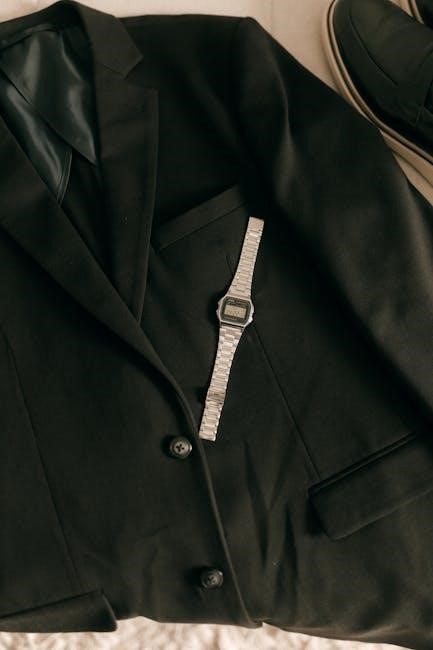
Expect a straighter cut and a fuller body. Classic fit jackets often feature wider lapels and a more pronounced shoulder line. While offering comfort, it’s crucial to ensure the jacket doesn’t appear boxy or ill-fitting. Proper tailoring is key to achieving a polished look with a classic fit. This style is a timeless choice, offering a sophisticated yet approachable aesthetic. It’s a great starting point for those new to suit wearing.
Common Fit Issues and How to Address Them
Even with careful measurement, fit issues can arise. A common problem is shoulders that don’t lie flat – this usually indicates a size too small. Conversely, excessive fabric bunching suggests a jacket that’s too large. Sleeve length is another frequent concern; sleeves should end just above the shirt cuff.
A tight chest restricts movement and looks unflattering, while a loose chest appears sloppy. Gapping at the back, below the collar, signals a need for shoulder adjustments. Wrinkling across the back often means the jacket is too tight. Addressing these issues often requires tailoring. Don’t hesitate to seek professional help – a well-fitted jacket dramatically improves your overall appearance and confidence.

5.1 Shoulders Too Wide/Narrow
Shoulder fit is paramount; it’s the most difficult alteration. If the jacket’s shoulders extend noticeably beyond your own, it’s too wide – creating a bulky, awkward silhouette. Conversely, if your shoulders feel constricted or the jacket pulls across the upper back, it’s too narrow. A proper fit means the jacket’s shoulder seams should lie flat, mirroring your natural shoulder line perfectly.
Minor width discrepancies can sometimes be adjusted, but significant alterations are costly and can compromise the jacket’s structure. It’s far better to start with a jacket that closely matches your shoulder measurement. Pay close attention to the “drop” – the difference between your chest and waist measurements – as this impacts shoulder fit. Prioritize shoulder fit above all else during your initial selection.
5.2 Sleeves Too Long/Short
Sleeve length is a crucial detail impacting overall jacket proportion. Ideally, approximately ¼ to ½ inch of your shirt cuff should be visible beyond the jacket sleeve. Sleeves that are too short expose the wrist entirely, appearing awkward and informal. Conversely, excessively long sleeves cover the hands, hindering movement and looking sloppy.
Sleeve length is one of the easier alterations to perform, making it a less critical initial concern than shoulder fit. However, consistently needing significant sleeve adjustments suggests an incorrect jacket size. Consider your arm length when choosing, and don’t rely solely on jacket size charts. A good rule of thumb is to bend your arms – the sleeve should end at the wrist bone.
5.3 Jacket Too Tight/Loose in the Chest
A properly fitted jacket should comfortably close without straining or creating unsightly bunching. If the jacket feels restrictive across the chest, limiting arm movement or causing button strain, it’s too tight. Conversely, a loose chest allows excessive fabric, disrupting the jacket’s silhouette and appearing ill-fitting.
Chest fit is paramount; alterations here can be complex. Minor tightness can sometimes be let out by a skilled tailor, but significant adjustments are often impractical. A jacket that’s too loose requires more extensive restructuring, potentially altering its shape. When trying on jackets, breathe deeply and move your arms to assess comfort and range of motion. Prioritize a comfortable, clean line across the chest.
Alterations: Tailoring for a Custom Fit
Even the most carefully chosen suit jacket often benefits from tailoring. Off-the-rack sizes are rarely perfect, and alterations bridge the gap between standard sizing and a truly personalized fit; Tailoring elevates your appearance, demonstrating attention to detail and investment in quality.
Common alterations include sleeve length adjustments, side seam adjustments for a slimmer silhouette, and collar adjustments for a cleaner roll. Don’t hesitate to address issues like shoulder fit – a skilled tailor can subtly reshape the jacket. Investing in alterations is often more cost-effective than purchasing a bespoke suit, delivering a near-custom experience. A well-tailored jacket will last longer and always look its best.
6.1 Common Alterations Needed
Several alterations frequently enhance a suit jacket’s fit. Sleeve length is a primary adjustment – typically shortened to reveal approximately half an inch of shirt cuff. Waist suppression, taking in the side seams, creates a more defined silhouette. Shoulder adjustments, while more complex, can refine the jacket’s overall structure.
A tailor can also adjust the vent length for improved comfort and movement. Collar adjustments ensure a proper roll, enhancing the jacket’s aesthetic. Lapel roll can be subtly reshaped. Button stance adjustments can improve the jacket’s drape. Minor tweaks to the back width can also improve the fit. Remember to wear your dress shoes and a similar shirt when getting alterations to ensure accuracy!
6.2 Finding a Reputable Tailor
Locating a skilled tailor is crucial for achieving a truly custom fit. Seek recommendations from friends, colleagues, or online reviews. Look for tailors specializing in suit alterations, as this demonstrates expertise. Observe the tailor’s workspace – a clean and organized environment suggests professionalism.
Don’t hesitate to ask questions about their experience and alteration process. A good tailor will listen attentively to your concerns and offer informed advice. Request a quote before committing to any alterations. A trial fitting is essential to ensure the adjustments are progressing as desired. Trust your instincts – choose a tailor you feel comfortable with and confident in their abilities. Communication is key for a successful tailoring experience!
Online vs. In-Store Suit Jacket Shopping
Both online and in-store suit jacket shopping offer unique advantages. In-store fitting allows you to physically try on jackets, assessing fit and comfort immediately. Expert sales associates can provide personalized guidance and sizing assistance. However, in-store selection may be limited, and prices can be higher.
Online shopping provides a wider variety of styles and brands, often at competitive prices. Detailed size charts and customer reviews can aid in selection, but accuracy relies on self-measurement. Return policies are crucial for online purchases, allowing for exchanges if the fit isn’t perfect. Consider both options based on your comfort level and specific needs. A hybrid approach – researching online then trying on in-store – can be ideal!
7.1 Benefits of In-Store Fitting
The primary benefit of in-store suit jacket fitting is the ability to experience the garment firsthand. You can immediately assess how the jacket drapes, moves with your body, and feels against your skin. Visual confirmation is invaluable – seeing how the shoulders lie, the sleeve length appears, and the overall silhouette complements your build.
Knowledgeable sales staff can offer expert advice, guiding you through different fits and styles based on your body type and preferences. They can pinpoint fit issues – like needing a longer length or a different shoulder width – that you might miss on your own. Immediate alterations can often be arranged, ensuring a perfect fit without delay. Trying on multiple sizes and styles is easily done, maximizing your chances of finding the ideal jacket.
7.2 Utilizing Online Size Charts & Guides

Shopping for suit jackets online requires diligent use of size charts and guides. Most retailers provide detailed measurements – chest, shoulders, sleeve length – that you must accurately compare to your own. Invest in a flexible measuring tape and have a friend assist for precise readings.
Pay close attention to brand-specific sizing, as variations are common. Read customer reviews for insights into whether a jacket runs true to size, large, or small. Understand the retailer’s return policy before purchasing, allowing for exchanges if the fit isn’t right. Compare charts across different brands to identify consistent sizing patterns. Don’t rely solely on your usual size; measurements are key! Utilize virtual try-on tools if available, but remember they are not always perfectly accurate.
Brand-Specific Sizing Variations
Suit jacket sizing isn’t standardized; significant variations exist between brands. What’s a 40R in one label might be a 38R or 42R in another. Italian brands, for example, often run smaller and slimmer than American brands. British tailoring frequently emphasizes a more traditional, fuller cut.
Luxury brands may have unique sizing philosophies reflecting their design aesthetic. Always consult the specific brand’s size chart before ordering, even if you know your general size. Researching online forums and reading customer reviews can reveal common sizing discrepancies for particular brands. Consider the brand’s target customer – a brand geared towards slimmer builds will likely have smaller sizes. Don’t assume consistency; treat each brand as a new sizing landscape.
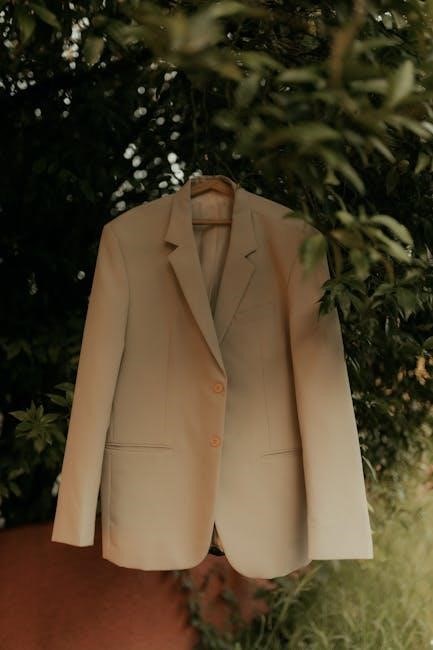
Additional Considerations
Beyond basic measurements, body type, fabric weight, and subtle details like collar roll significantly impact how a suit jacket fits and flatters you.
Body Type and Suit Jacket Choice
Understanding your body type is crucial for selecting a suit jacket that complements your physique. For those with broader shoulders and a V-shaped torso, a structured jacket with defined shoulders works wonderfully, enhancing your natural build.
Men with a more athletic build might benefit from a modern or slim fit, providing a tailored silhouette without feeling restrictive. If you have a slimmer frame, avoid overly boxy cuts that can overwhelm your shape; a classic or modern fit offers a more proportional look.
Individuals with a larger midsection should opt for jackets with a bit more room in the chest and waist, potentially requiring alterations for a cleaner fit. Prioritizing comfort and a natural drape will ensure a polished appearance, regardless of your body type. Don’t be afraid to experiment!
Fabric and its Impact on Fit
The fabric of your suit jacket significantly influences its fit and feel. Heavier fabrics like tweed or flannel often require a looser fit to allow for comfortable movement and layering underneath. These materials naturally have more structure and can appear bulky if cut too tightly.
Lighterweight fabrics, such as linen or tropical wool, can be tailored closer to the body without sacrificing comfort. They drape more fluidly and are ideal for warmer climates. Consider the fabric’s stretch; blends with elastane or Spandex offer greater flexibility and a more forgiving fit.
Always factor in potential shrinkage, especially with natural fibers like wool. A slightly larger initial fit may be necessary to accommodate this. Remember, the fabric dictates how the jacket will hang and move, impacting the overall silhouette.
Understanding Drop (The Difference Between Chest and Waist)
“Drop” refers to the difference in inches between your chest measurement and your waist measurement. This is a crucial factor in achieving a flattering suit jacket fit, influencing the jacket’s silhouette and how it conforms to your body shape.
A typical drop ranges from 6 to 8 inches. For example, a 40” chest would ideally pair with a 32-34” waist. A larger drop suggests a more V-shaped physique, benefiting from a closer fit. A smaller drop indicates a straighter build, potentially requiring adjustments for a defined waist.
Knowing your drop helps determine the appropriate jacket size and style. It’s not simply about chest size; it’s about the proportional relationship between your chest and waist. Ignoring drop can result in a jacket that appears boxy or ill-fitting, regardless of the numerical size.
The Importance of a Proper Collar Roll
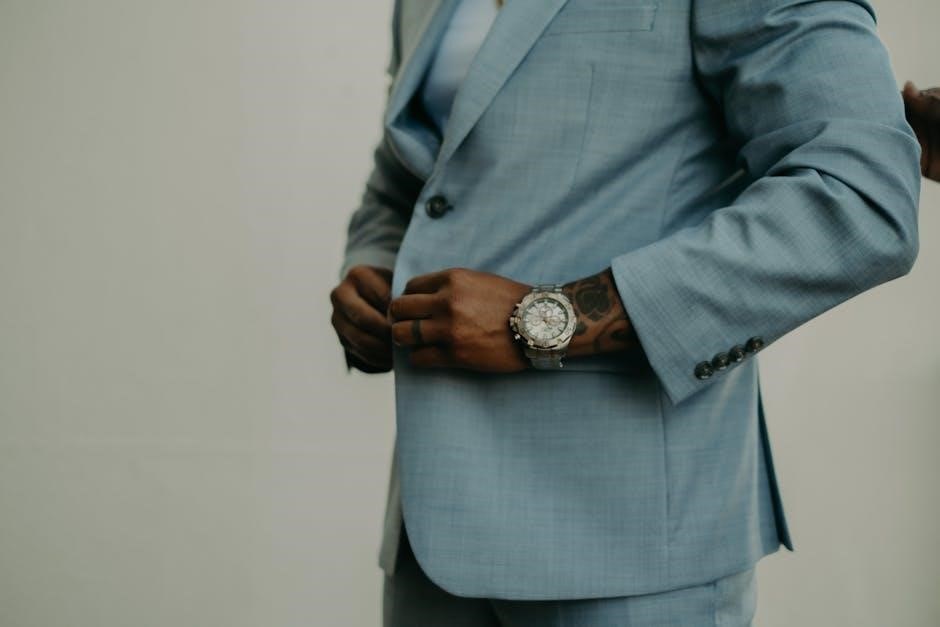
A proper collar roll is a subtle yet vital element of a well-fitted suit jacket; It signifies a jacket constructed with the correct shoulder width and overall balance, dramatically impacting your appearance.
Ideally, the collar should lie flat against the back of your neck without any gaping or bunching. A clean collar roll indicates the jacket’s shoulders align perfectly with yours, creating a smooth, natural line. Gaping suggests shoulders are too wide, while bunching indicates they’re too narrow.
Pay attention to how the collar interacts with your shirt collar. A slight “break” – where the jacket collar gently separates from your shirt collar – is desirable. This detail elevates the jacket’s aesthetic and demonstrates attention to detail. A poor collar roll detracts from the overall sophistication.