
cpt code breast biopsy ultrasound guided
Need a breast biopsy with ultrasound guidance? We break down CPT codes, explain the process, and help you find trusted guidance. Learn more now!
Article Plan: CPT Codes for Ultrasound-Guided Breast Biopsy
This article details the Current Procedural Terminology (CPT) codes essential for billing ultrasound-guided breast biopsies‚
covering core codes like 19083 and 19084‚ alongside related procedures and crucial billing considerations for accurate reimbursement․
Breast biopsies are crucial diagnostic procedures performed when imaging reveals suspicious findings‚ such as those detected during mammography or MRI․ These findings necessitate tissue sampling for pathological examination to determine if cancer is present․ A variety of biopsy techniques exist‚ each suited to different lesion characteristics and locations․
Ultrasound guidance has become a cornerstone of modern breast biopsy practice․ It offers real-time visualization of the lesion and the biopsy needle‚ enhancing accuracy and minimizing the risk of sampling errors․ The radiology report will specifically recommend the appropriate biopsy type – ultrasound-guided‚ stereotactic‚ or MRI-guided – based on the lesion’s characteristics․
Ultrasound-guided core biopsies‚ utilizing CPT codes 19083 and 19084‚ are frequently performed for palpable or sonographically visible lesions․ These procedures often include placement of a micro-clip for post-operative localization‚ aiding in potential future surgical interventions․ Accurate coding and documentation are paramount for appropriate reimbursement․
What is an Ultrasound-Guided Breast Biopsy?
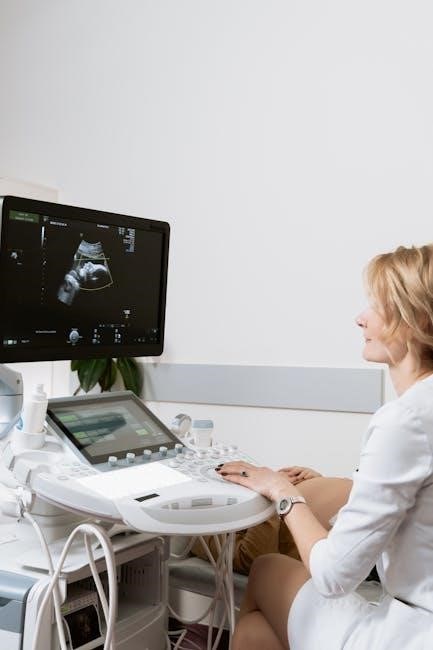
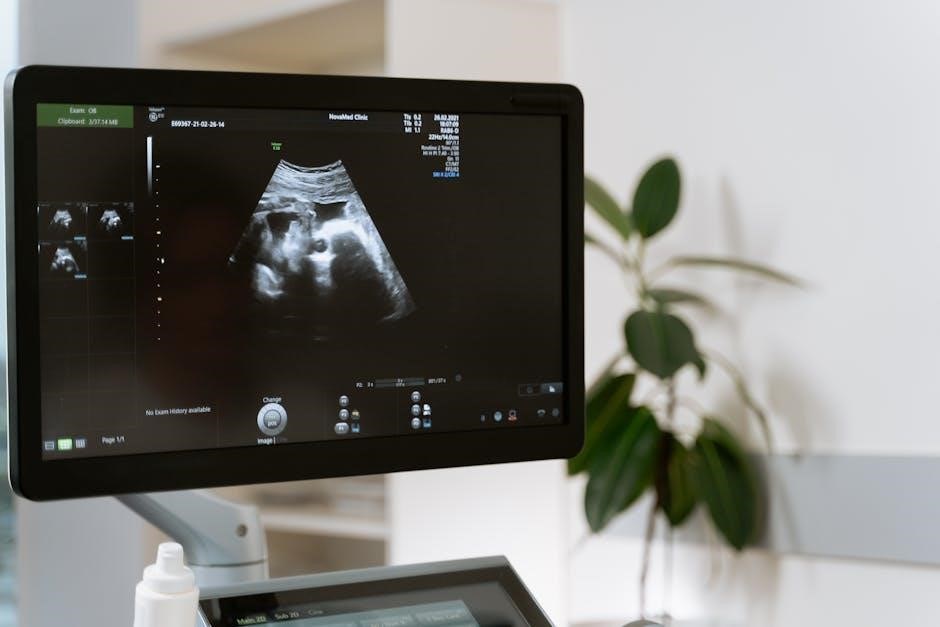
An ultrasound-guided breast biopsy is a minimally invasive procedure used to obtain a tissue sample from a suspicious area within the breast․ High-frequency sound waves create real-time images of the breast tissue‚ allowing the radiologist to visualize the lesion and guide a thin needle to the target area with precision․
During the procedure‚ the patient typically lies on their stomach with one breast positioned on a cushioned table․ A gel is applied to the skin‚ and a transducer emits sound waves․ Once the lesion is identified‚ a local anesthetic is administered to numb the area․ A small incision is made‚ and a core biopsy needle is inserted to collect several tissue samples․
Often‚ a small breast localization device (clip) is placed at the biopsy site‚ aiding in potential future surgical planning․ The procedure is generally quick‚ with minimal discomfort‚ and allows for accurate diagnosis of breast abnormalities․ CPT code 19083 specifically covers the first lesion biopsied using this technique․
Why Ultrasound Guidance is Preferred
Ultrasound guidance is frequently favored for breast biopsies due to its numerous advantages over other imaging modalities․ It’s readily available‚ cost-effective‚ and doesn’t involve ionizing radiation‚ making it a safer option for many patients․ Real-time imaging allows the radiologist to visualize the needle’s path directly‚ ensuring accurate targeting of the suspicious lesion‚ even those that are small or difficult to palpate;
Furthermore‚ ultrasound is particularly effective for evaluating dense breast tissue‚ where mammography may have limitations․ It can differentiate between solid masses and fluid-filled cysts‚ guiding the biopsy towards the most concerning areas․ The ability to visualize the needle insertion also minimizes the risk of damaging surrounding structures․
CPT codes 19083 and 19084 inherently include ultrasound guidance‚ recognizing its integral role in the procedure’s accuracy and safety․ This guidance is crucial for obtaining representative tissue samples for definitive diagnosis․
CPT Codes: Core Codes
The primary CPT codes for ultrasound-guided breast biopsies are 19083 for the first lesion and 19084 for each additional lesion biopsied during the same session․
CPT Code 19083: First Lesion
CPT code 19083 represents the biopsy of the first lesion encountered during an ultrasound-guided breast biopsy procedure․ This code encompasses several key components‚ including the actual biopsy itself‚ the placement of a breast localization device – often a clip or metallic pellet – and imaging of the biopsy specimen․ Critically‚ ultrasound guidance is included within this code; it is not a separately billable service when performed in conjunction with the biopsy․
Documentation must clearly demonstrate the performance of all included components to justify billing 19083․ The medical record should detail the suspicious finding identified on imaging (like a mammogram)‚ the ultrasound guidance used to access the lesion‚ the biopsy technique employed‚ and confirmation of clip placement‚ if applicable․ Proper coding ensures appropriate reimbursement for this essential diagnostic procedure in breast cancer evaluation․
CPT Code 19084: Each Additional Lesion
CPT code 19084 is utilized to report each additional lesion biopsied during the same ultrasound-guided breast biopsy session‚ following the initial lesion coded with 19083․ Like 19083‚ this code inherently includes ultrasound guidance‚ breast localization device placement (if performed)‚ and imaging of the biopsy specimen for each subsequent lesion targeted․
It’s crucial to understand that 19084 is not billed for the first lesion; it’s an add-on code․ Accurate documentation is paramount‚ clearly outlining each lesion biopsied‚ the ultrasound guidance used for each‚ and any localization devices placed․ Billing 19084 requires a clear indication in the medical record that multiple lesions were addressed during the single procedure‚ supporting the need for the additional code and ensuring appropriate reimbursement․
Understanding the “Including Ultrasound Guidance” Component
A critical aspect of CPT codes 19083 and 19084 is the inherent inclusion of ultrasound guidance․ This means that separate billing for the ultrasound guidance itself is not permitted when these codes are used for an ultrasound-guided breast biopsy․ The ultrasound is an integral part of the procedure‚ guiding the biopsy needle to the target lesion and is bundled into the overall code value․
This bundled component simplifies billing‚ but also necessitates accurate procedure coding․ Attempting to bill separately for the ultrasound guidance alongside 19083 or 19084 will likely result in claim denials․ Proper documentation should clearly demonstrate the use of ultrasound for guidance‚ but avoid explicitly listing it as a separately billable service․ Understanding this bundled component is vital for compliant and successful claim submissions․
CPT Codes: Additional Procedures & Modifiers
Beyond core biopsy codes‚ procedures like clip placement (using codes like 19083) and specimen imaging require attention․ Modifiers may be needed to accurately reflect the services rendered․
Placement of Breast Localization Device (Clip Placement)
The placement of a breast localization device‚ often a small metallic clip‚ is frequently performed concurrently with an ultrasound-guided breast biopsy․ This clip serves as a marker to pinpoint the biopsy site for potential future surgical excision‚ ensuring accurate removal of the targeted tissue․ CPT code 19083 specifically includes the placement of these localization devices when performed alongside the initial lesion biopsy under ultrasound guidance․
It’s crucial to understand that the clip placement isn’t separately billable when bundled within 19083 for the first lesion․ However‚ if a clip is placed without a concurrent biopsy‚ or for a separate indication‚ different coding may apply․ Proper documentation detailing the reason for clip placement is paramount for accurate billing and avoiding claim denials․ The documentation must clearly support the medical necessity of the device placement in relation to the biopsy procedure․
Furthermore‚ the radiologist’s report should explicitly state whether a clip was placed and its location within the breast tissue․ This detailed reporting is essential for both clinical follow-up and accurate coding practices․
CPT Codes for Biopsy Specimen Imaging
Imaging of the biopsy specimen obtained during an ultrasound-guided breast biopsy is an integral part of the procedure‚ and is often included within the core biopsy codes․ Specifically‚ CPT code 19083 (first lesion) and 19084 (each additional lesion) inherently encompass imaging of the specimen‚ when performed․ This imaging confirms the acquisition of adequate tissue for pathological analysis and verifies the correct targeting of the suspicious lesion․
However‚ if more extensive or specialized specimen imaging is performed beyond the standard assessment included in 19083/19084‚ additional coding may be considered‚ depending on the specific services rendered․ Detailed documentation outlining the type and extent of specimen imaging is vital to support any additional coding claims․
Radiology reports should clearly articulate the imaging techniques used and the findings observed during specimen evaluation․ This comprehensive reporting ensures transparency and justifies the billed services‚ minimizing potential audit concerns and maximizing appropriate reimbursement․
Modifier Usage with Ultrasound-Guided Biopsies
Modifiers play a crucial role in accurately representing the circumstances of ultrasound-guided breast biopsies‚ particularly when deviations from standard procedures occur․ While routine biopsies generally don’t require modifiers‚ specific scenarios necessitate their use for appropriate billing․ For instance‚ if a biopsy is performed on a lesion that was previously biopsied‚ a modifier indicating a repeat procedure might be applicable‚ contingent upon payer guidelines․
Furthermore‚ if the ultrasound guidance is unusually complex or time-consuming due to lesion location or patient factors‚ documentation supporting the increased effort is essential․ Modifiers aren’t automatically applied; they require clear justification in the medical record․
Always consult the latest CPT guidelines and payer-specific policies to ensure correct modifier application‚ preventing claim denials and ensuring accurate reimbursement for the services provided during the ultrasound-guided breast biopsy procedure․
Billing & Coding Considerations
Accurate billing requires meticulous documentation supporting CPT codes 19083 & 19084‚ ensuring medical necessity and proper procedure reporting for ultrasound-guided breast biopsies․
Documentation Requirements for CPT 19083 & 19084

Comprehensive documentation is paramount when billing CPT codes 19083 (first lesion) and 19084 (each additional lesion) for ultrasound-guided breast biopsies․ The medical record must clearly demonstrate the indication for the biopsy‚ including the suspicious finding identified on prior imaging – such as mammography or ultrasound – and its characteristics․
Specifically‚ document the lesion’s size‚ location (using clock-face notation)‚ and any relevant imaging features․ A detailed description of the ultrasound guidance process is crucial‚ confirming real-time visualization of the needle placement․ The report should explicitly state the placement of any breast localization device (clip)‚ if performed‚ and confirmation of its appropriate positioning․
Furthermore‚ documentation must support the number of lesions biopsied to justify the use of 19084 for each additional lesion beyond the first․ Finally‚ include a statement confirming imaging of the biopsy specimen was performed‚ as this is included in the code description․ Lack of sufficient detail can lead to claim denials․
Switching Modalities & Justification
Occasionally‚ a provider may need to switch imaging modalities during a breast biopsy procedure – for example‚ transitioning from ultrasound guidance to MRI guidance; This requires meticulous documentation to support the medical necessity and avoid claim denials․ The record must clearly articulate the reason for the change‚ such as limitations encountered with the initial modality‚ like poor visualization due to lesion characteristics or patient habitus․
Simply stating a preference is insufficient; a specific clinical justification is essential․ Examples include ultrasound’s inability to adequately visualize a deeply seated lesion or the need for MRI guidance to confirm clip placement․
Documentation provided must clearly support the need to switch modalities․ The initial and subsequent CPT codes used (e․g․‚ 19083/19084 transitioning to 19085/19086) should be clearly linked to the documented rationale for the change in approach․
Coding for Bilateral Ultrasound-Guided Biopsies
When performing ultrasound-guided core biopsies on both breasts during the same session‚ specific coding guidelines apply․ CPT code 19083 represents the first lesion biopsied‚ regardless of which breast it’s located in․ For each additional lesion biopsied in either breast during the same encounter‚ use CPT code 19084․
It’s crucial to remember that each lesion biopsied‚ not each breast‚ dictates the use of 19084․ Therefore‚ if two lesions are biopsied in the left breast and one in the right‚ you would report 19083 once and 19084 twice․
Modifier 59 (Distinct Procedural Service) is generally not required simply for bilateral biopsies using these codes‚ as the codes inherently account for multiple lesions․ However‚ ensure thorough documentation supports the medical necessity of biopsying each identified lesion․
Related Imaging Procedures & CPT Codes
Diagnostic (77066 & 77062) and post-procedural mammography (77061 & 77065) codes are frequently used alongside ultrasound-guided biopsies‚ as is breast MRI․
CPT Codes for Diagnostic Mammograms (77066 & 77062)
Diagnostic mammography plays a crucial role in identifying suspicious lesions that often necessitate biopsy․ CPT code 77066 represents diagnostic mammography‚ bilateral‚ including computer-aided detection (CAD) when performed․ This code is utilized when investigating a specific breast concern‚ such as a palpable lump or nipple discharge‚ leading to the recommendation for an ultrasound-guided biopsy․
CPT code 77062 describes diagnostic mammography‚ unilateral‚ including CAD when performed․ This is applicable when only one breast requires detailed imaging due to a localized issue․ Often‚ a diagnostic mammogram precedes an ultrasound-guided breast biopsy to further characterize the lesion and guide the biopsy procedure․ Accurate coding of these mammography services is vital for appropriate reimbursement alongside the biopsy itself․
The combination of diagnostic mammography and subsequent ultrasound-guided biopsy provides a comprehensive approach to breast cancer diagnosis․
CPT Codes for Post-Procedural Mammography (77061 & 77065)
Post-procedural mammography is frequently performed after an ultrasound-guided breast biopsy to confirm successful clip placement and assess for any immediate post-biopsy changes․ CPT code 77061 represents post-procedural mammography‚ bilateral‚ and is utilized when imaging both breasts following the biopsy procedure; This ensures proper localization device (clip) positioning‚ crucial for future reference․
CPT code 77065 describes post-procedural mammography‚ unilateral․ This is applicable when imaging is only required on the breast where the biopsy was performed․ Often‚ tomosynthesis is included with these post-procedural images‚ enhancing visualization․ Accurate coding of these post-biopsy mammograms is essential for complete billing and documentation of the entire diagnostic process․
These codes demonstrate the continuity of care‚ from initial detection to biopsy and post-biopsy assessment‚ ensuring comprehensive breast health management․
Breast MRI & its Role in Biopsy Guidance
While ultrasound guidance is common for breast biopsies‚ Magnetic Resonance Imaging (MRI) plays a vital role in specific scenarios‚ offering alternative guidance and detailed visualization․ MRI-guided biopsies utilize CPT codes 19085 and 19086‚ differing from the ultrasound-guided codes (19083 & 19084)․ MRI is particularly useful for lesions not easily visualized with ultrasound or mammography‚ or for patients with dense breast tissue․
The decision to switch modalities – from ultrasound to MRI guidance – requires clear documentation justifying the change․ This justification should detail why ultrasound was insufficient and how MRI improves diagnostic accuracy․ Breast MRI without contrast is also a diagnostic tool used in the evaluation process․
MRI’s ability to characterize lesions and guide biopsies with precision makes it a valuable adjunct to traditional ultrasound-guided techniques‚ enhancing the overall diagnostic pathway for suspicious breast findings․
Sentinel Node Dissection & Mastectomy Coding (Related Procedures)
Following a biopsy‚ mastectomy or sentinel node dissection may be necessary; these procedures have distinct CPT codes separate from biopsy codes like 19083 and 19084․
CPT Codes for Sentinel Node Dissection
Sentinel node dissection (SND) is a crucial staging procedure often performed after a breast biopsy reveals cancerous cells․ Accurate coding is vital for appropriate reimbursement․ The primary CPT code for SND is 39040 – Excision of sentinel lymph node(s)‚ axillary․ This code encompasses the identification and removal of the first lymph node(s) to which cancer cells are likely to spread․
However‚ several nuances exist․ If the sentinel node biopsy is performed as part of a larger axillary lymph node dissection‚ the 39040 code should not be billed separately․ Instead‚ the code for the complete axillary dissection (e․g․‚ 39041 – Axillary lymph node dissection‚ level I and II) would be used․
Documentation must clearly support the performance of a dedicated SND procedure‚ distinct from a more extensive lymph node dissection․ Modifiers may be necessary to indicate unilateral or bilateral procedures‚ or to specify unique circumstances of the case․ Proper coding ensures accurate billing and reflects the complexity of the surgical intervention․
CPT Codes for Mastectomy Procedures
Mastectomy‚ the surgical removal of the breast‚ requires precise CPT code selection based on the extent of resection․ Simple or total mastectomy is coded with 19361 (Mastectomy‚ simple or total)․ Modified radical mastectomy‚ involving removal of the breast and axillary lymph nodes‚ is reported using 19362․ Radical mastectomy‚ a more extensive procedure including chest wall resection‚ is coded as 19363․
When nipple-sparing mastectomy is performed‚ code 19365 (Mastectomy with nipple-sparing technique) is appropriate․ If immediate breast reconstruction is undertaken concurrently‚ additional codes for the reconstruction procedure must be appended․
Documentation should clearly delineate the surgical approach and extent of resection․ Bilateral mastectomies require the addition of modifier -50 to the primary procedure code․ Accurate coding reflects the complexity of the mastectomy and ensures appropriate reimbursement for the surgical services rendered․
Resources & Updates
Staying current with CPT code changes is vital for accurate billing․ Regularly consult the American Medical Association (AMA) and coding resources for updates impacting breast biopsy procedures․
Staying Current with CPT Code Changes
The landscape of CPT coding is dynamic‚ necessitating continuous professional development for accurate billing of ultrasound-guided breast biopsies․ The American Medical Association (AMA) releases annual updates to CPT codes‚ often impacting radiology and interventional procedures․ Staying informed about these changes is crucial to avoid claim denials and ensure appropriate reimbursement․
Several resources are available to assist coders and billers․ The AMA’s CPT Assistant provides detailed explanations and guidance on code application․ Additionally‚ professional organizations like the American College of Radiology (ACR) offer coding webinars‚ publications‚ and advocacy efforts related to radiology coding․ Regularly reviewing coding newsletters and attending industry conferences can also help professionals remain up-to-date․
Furthermore‚ pay close attention to Local Coverage Determinations (LCDs) issued by Medicare Administrative Contractors (MACs)‚ as these can influence coding requirements within specific regions․ Proactive monitoring of these resources will help ensure compliance and optimize revenue cycle management for ultrasound-guided breast biopsy procedures․